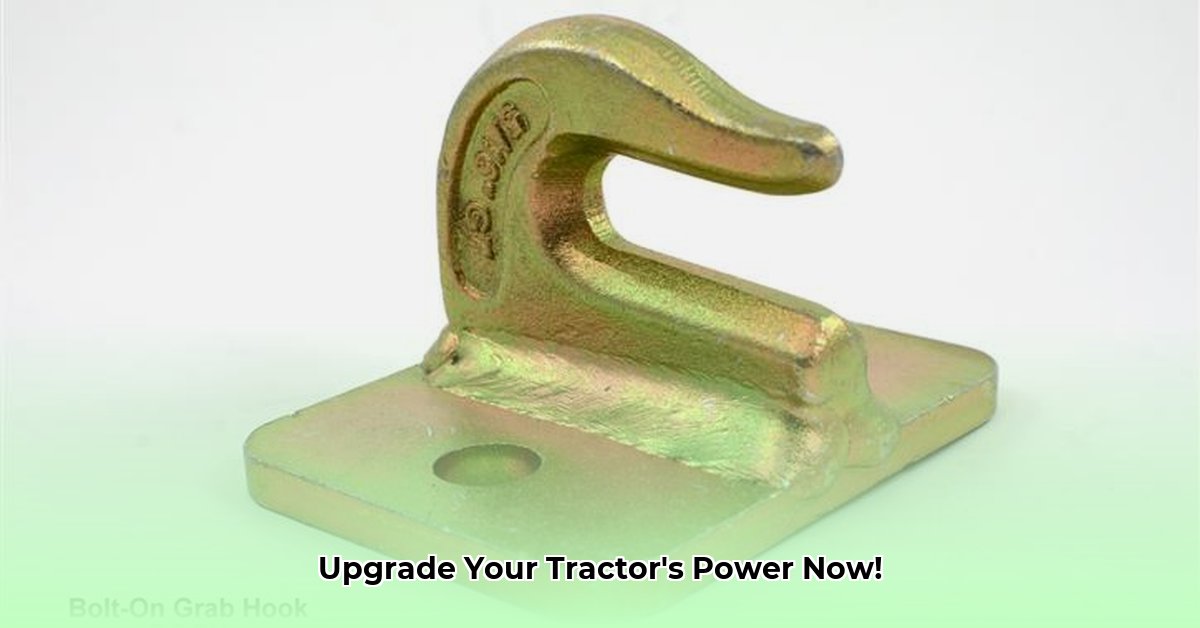
Choosing the right bolt-on hooks for your tractor bucket is crucial for safety and efficiency. This guide simplifies the process, helping you select, install, and maintain these essential attachments. For more information on tractor attachments, check out this helpful resource: Tractor Attachments. Let's get started!
Understanding Your Needs: Matching Hooks to Your Tractor and Tasks
Before selecting hooks, assess your tractor's capabilities and intended uses. What's the tractor's lifting capacity? Will you be moving light materials like garden debris or heavier items like hay bales or logs? Matching hook capacity to your tractor and loads is paramount. Underestimating load capacity can lead to equipment damage or injury. For example, delicate tasks like moving potted plants require different hooks than those needed for moving heavy logs. This careful assessment ensures both safety and efficient operation.
Exploring Your Options: Types of Bolt-On Hooks
Several key factors influence hook selection:
Weight Capacity: Always choose hooks rated significantly above the heaviest load you anticipate. A safety margin is crucial. Don't risk equipment failure or injury by cutting corners. A common mistake is underestimating weight, leading to dangerous situations. Remember, ounce of prevention is worth a pound of cure.
Material Matters: While many hooks use mild steel, Grade 70 steel is preferred for superior strength and longevity. Grade 70 steel offers significantly improved tensile strength compared to standard mild steel. Consider domestically produced hooks for potential quality control advantages and readily available support.
Compatibility is Key: Ensure the hooks perfectly match your tractor bucket's design and dimensions. Double-check manufacturer specifications to ensure a secure fit. Incorrect sizing can put undue stress on the mounting points and potentially cause failure. This also includes considering your bucket type; heavier buckets necessitate robust hooks.
Installing Your Bolt-On Hooks: A Step-by-Step Guide
Proper installation is essential for safe and reliable operation. Follow these steps meticulously:
Safety First: Power down the tractor completely. Disconnect the PTO (Power Take-Off) and hydraulics to prevent accidental movement. Secure the bucket using chocks or blocks to prevent shifting. This is non-negotiable and vital for preventing injury.
Precise Positioning: Carefully align the hooks with designated mounting points on the bucket. Double-check alignment before tightening bolts. Improper alignment can lead to uneven stress and potential failure.
Secure Fastening: Use the supplied bolts, washers, and nuts. Tighten securely, but avoid over-tightening, which can damage the equipment. Use a torque wrench for precise tightening if possible. Over-tightening can also strip the threads.
Test Lift: Before loading, perform a test lift with a light weight. Check the hooks' alignment and operation for any issues. This preventative measure helps identify any small problems early before they escalate.
Maintaining Your Investment: Caring for Your Bolt-On Hooks
Regular maintenance ensures longevity and safety:
Regular Inspections: Before each use, thoroughly inspect hooks for cracks, bends, rust, or deformation. Replace any damaged hooks immediately. Compromised hooks are major safety hazards that should not be ignored.
Proper Storage: Store hooks in a dry, protected area to prevent corrosion. This simple preventative step extends their lifespan.
Load Limits: Never exceed stated weight capacities. Exceeding load limits can cause serious damage to the hooks, the bucket, or the tractor and can cause serious injury.
Compliance: Adhere to manufacturer guidelines and relevant safety regulations.
Comparing Your Options: A Quick Look at Hook Types
Here's a comparison of common hook types:
| Feature | Lightweight Hook | Heavy-Duty Hook |
|---|---|---|
| Material | Mild Steel | High-tensile Steel (Grade 70 or similar) |
| Weight Capacity | Up to 1,000 lbs | 2,000 lbs and up |
| Price | Generally less costly | More expensive |
| Best For | Light materials | Heavy materials |
Remember, these are guidelines; always consult manufacturer specifications.
Final Thoughts: Prioritize Safety
Safe practices are paramount. If you're unsure about any aspect of selection, installation, or maintenance, consult your tractor's manual or a qualified mechanic. Preventing accidents is always preferable to dealing with their consequences. Prioritizing safety not only protects equipment but also safeguards personal well-being.
How to Choose the Best Bolt-On Hooks for Small Tractors
Selecting the correct hooks for a small tractor demands careful consideration of several key factors. These factors influence the hook's safety, durability, and overall suitability for the task at hand. Understanding these aspects helps ensure long term use and safety.
Understanding Your Needs: Matching Hooks to Your Tractor and Tasks
Before researching hook types, determine your tractor's lifting capacity and intended uses. Small tractors have limitations; exceeding them risks serious damage. Consider material weight; a small tractor may be fine for moving potting soil but struggles with heavy logs. Matching capacity to the task prevents overload and maximizes efficiency. This analysis ensures that the hooks are fit for purpose, avoiding potential risks associated with using inadequately sized hooks.
Selecting the Right Bolt-On Hooks
Several factors influence hook selection for small tractors:
Weight Capacity: This is critical. Always select hooks with a weight capacity well exceeding the anticipated load. Underestimating leads to dangerous overloads.
Material: Grade 70 steel provides superior strength and durability for small tractors often subjected to stress. Galvanized steel offers added corrosion resistance for outdoor use.
Hook Design: Different designs cater to varied needs; some are better suited to different materials.
Compatibility: Ensure the hooks fit your tractor bucket's size and mounting points. Incorrect sizing causes stress and potential failure.
Installation: A Step-by-Step Guide
Correct installation is crucial for safety and longevity.
Preparation: Clean mounting areas thoroughly.
Positioning: Align hooks with mounting points.
Fastening: Secure with appropriate bolts, washers, and locking nuts. Tighten according to manufacturer specifications.
Testing: Conduct a test lift with a lighter weight before full operation.
Maintenance and Safety
Regular inspection is vital. Check bolts for tightness and look for wear, damage, or corrosion. Address issues promptly. Always operate within the hook's weight capacity and use additional safety measures like safety chains whenever possible.
Weighing the Alternatives: Bolt-On vs. Weld-On Hooks
While bolt-on hooks offer convenience, weld-on options provide superior strength and durability. Weld-on options require welding skills or professional services. The choice depends on your skillset and budget. Weld-on hooks are often favoured for applications needing maximum strength and durability, while bolt-on hooks are favoured for ease of installation and removal The best choice depends on specific needs and available resources.